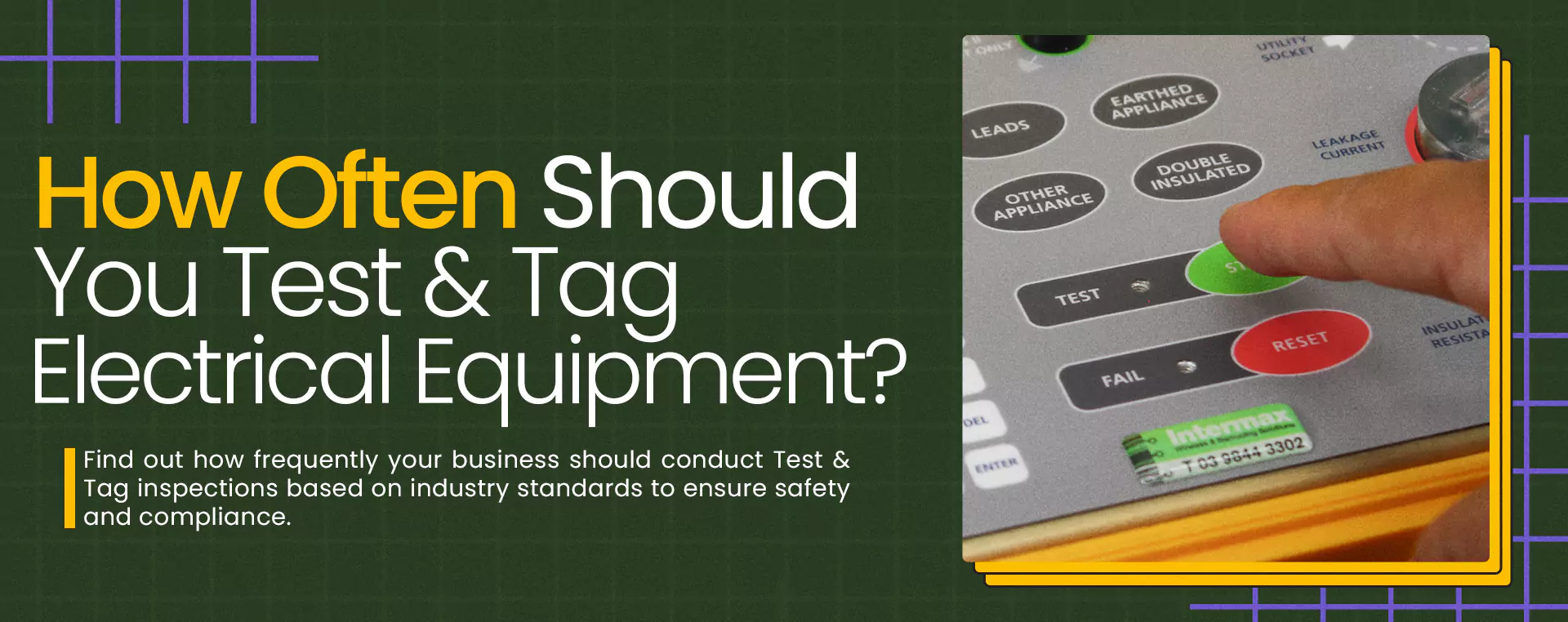
How Often Should You Test & Tag Electrical Equipment?
Overview: How often you need to Test & Tag depends on your industry and work environment. According to AS/NZS 3760, testing is required every 3 months on construction sites, every 6 months in workshops, and annually in office settings. Regular Test & Tag helps prevent electrical hazards, ensures compliance, and extends equipment life. Intermax offers tailored Test & Tag schedules to fit your risk level and keep your workplace safe, efficient, and compliant—without the hassle.
One of the most common questions about Test & Tag is how often businesses need to conduct it. The answer varies based on factors like industry, environment, and equipment usage. Understanding Test & Tag frequency ensures businesses stay compliant with safety regulations and reduce the risk of electrical hazards.
In this article, we’ll explore the recommended Test & Tag intervals and why sticking to a regular schedule is crucial for workplace safety.

1. Factors Affecting Test & Tag Frequency?
The environment in which your equipment operates is a significant factor in determining testing frequency. High-risk industries, like construction or manufacturing, require more frequent testing due to the rigorous demands on equipment. In contrast, low-risk environments, such as offices, may only need testing annually.

2. Recommended Test & Tag Intervals for Different Industries?
Australian Standard AS/NZS 3760 provides a detailed guide for testing intervals. Here are some general recommendations:
- Construction Sites: Every 3 months
- Factories and Workshops: Every 6 months
- Office Equipment: Annually
Following these intervals helps you comply with safety standards and reduces the risk of equipment malfunction.

3. Benefits of Following a Test & Tag Schedule?
Regular Test & Tag not only keeps you compliant but also extends the life of your equipment. Routine testing identifies potential issues early, allowing for timely repairs or replacements. This proactive approach minimizes unexpected downtime and enhances overall productivity.
4. Customising Your Test & Tag Schedule
While standards provide general guidelines, each business should tailor its Test & Tag schedule based on its unique needs. Consulting with a Test & Tag provider, like Intermax, can help you create a personalized schedule that aligns with your industry requirements and risk level.

Test & Tag Laws in Australia—Are You Compliant?
From office gear to power tools, Australian businesses must meet strict safety rules. Find out what’s required and how to stay covered.
Stay Compliant with a Regular Test & Tag Schedule
Keeping your workplace safe starts with a consistent Test & Tag schedule. By following AS/NZS 3760 standards, you can:
- ✅ Protect Employees – Reduce the risk of electrical hazards and create a safer work environment.
- ✅ Ensure Compliance – Avoid legal penalties and meet industry safety regulations.
- ✅ Optimize Equipment Performance – Prevent malfunctions, extend equipment lifespan, and minimize downtime.
At Intermax, we make Test & Tag simple and hassle-free with customized solutions tailored to your business needs.
Ready to set up a Test & Tag Schedule?
Contact Intermax to today to get started.