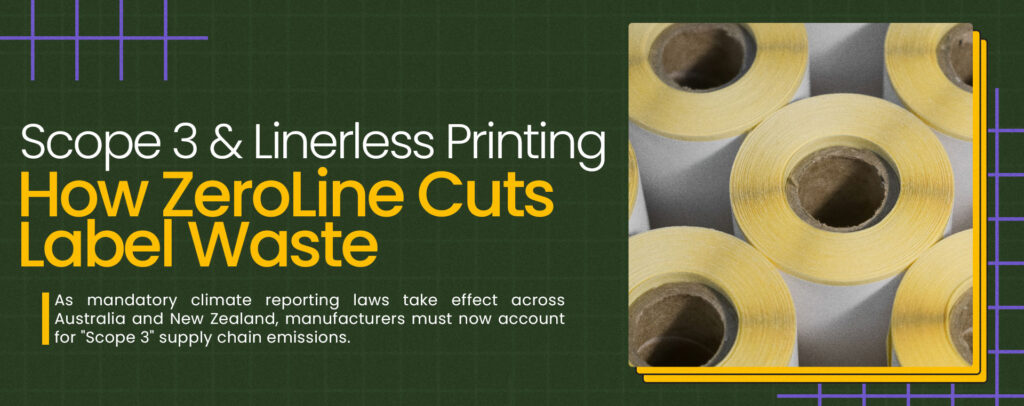
Scope 3 & Linerless Printing: How ZeroLine Cuts Label Waste
Overview: As mandatory climate reporting laws take effect across Australia and New Zealand, manufacturers must now account for “Scope 3” supply chain emissions. This guide explains how transitioning to ZeroLine linerless printing eliminates the hidden carbon cost of label waste, helping businesses turn environmental compliance into a competitive advantage.
For a long time, “sustainability” in business was fairly straightforward. You switched to LED bulbs, recycled your office paper, and tried to use less fuel in the company vans. In the industry, these are known as Scope 1 and 2 emissions, the stuff you directly control.
But the rules have changed. Across Australia and New Zealand, a new term is appearing in boardrooms and supply chain meetings: Scope 3.
For large manufacturers, Scope 3 is the “missing piece” of their environmental footprint. It is also the reason why traditional labels are becoming a liability, and why ZeroLine Linerless Printing is the solution.
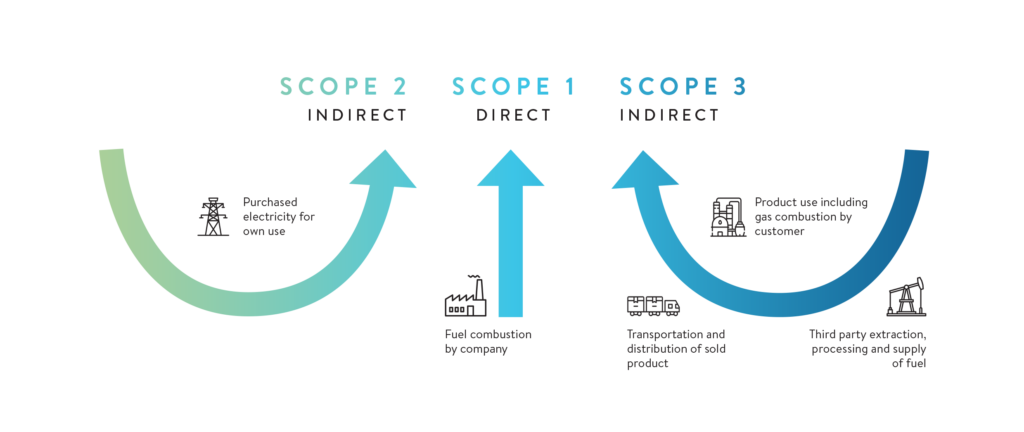
What is Scope 3, and Why Does it Matter?
To prevent double-counting, international standards break emissions into three “scopes”:
The Secret Carbon Cost of a Label
Every standard label has a liner, that slippery, silicone-coated backing paper that ends up in a heap on the warehouse floor. Under the new rules, that waste hits a company’s carbon report twice:
- The “Upstream” Hit (Manufacturing): Every ton of backing paper you buy requires energy and raw materials to create. Under Scope 3, the buyer takes “ownership” of the carbon emitted during that production.
- The “Downstream” Hit (Disposal): Label liners are notoriously hard to recycle. Most end up in landfills or require heavy, fuel-burning trucks to haul the waste away. Every “carbon mile” those trucks travel counts against the company’s total.
The Solution: ZeroLine Printing
This is where ZeroLine technology from TSC and Techspan comes in. Unlike traditional labels, linerless printing removes the backing paper entirely. By switching to a ZeroLine-capable printer, you are “trimming the fat” from a Scope 3 report:
- 50% Less Material: You immediately eliminate half the raw material weight from your supply chain.
- Zero Landfill Waste: There is no backing paper to collect, bale, or transport.
- More Labels Per Roll: Fewer roll changes mean fewer shipments and a smaller transport footprint.
We recommended linerless printing because it saved money on waste fees. Today, it’s about Compliance. As large manufacturers face pressure from regulators to get their Scope 3 numbers down, they will choose suppliers who provide low-waste solutions. Switching to ZeroLine is the “low-hanging fruit” of carbon reduction—it increases efficiency while providing the hard data needed to satisfy 2026 reporting requirements.