

GS1 New Truncation Rule for Retail POS
GS1 New Truncation Rule for Retail POSOverview: GS1 has updated its retail packaging standards to…
Read More
Overview: Barcodes turn product information into machine-readable patterns, and barcode scanners decode these patterns using light, sensors, and a product database to instantly identify items. By eliminating manual entry, scanners dramatically reduce errors, speed up checkout and inventory tasks, and improve stock accuracy across retail, warehousing, and manufacturing. With different scanner types—wand, pen, laser, and even smartphone-based imaging—you can choose the best fit for your business needs and streamline operations effortlessly.
From cereal to stationary and everything else we buy at the shops, there are barcodes on just about everything today.
These zebra stripes make it easy for us to keep track of our sales and stock levels.
If you sell products of any kind, it’s important that you keep track of what you sell and how much stock you have left. This will help you place orders and keep track of your inventory.
But, these two methods don’t keep track of your sales. For all you know, your stock could be low because someone stole something.
The other problem is that you’d have to price all your products by hand. If you choose to run a promotion or increase the price, the process could take a long time.
That’s where barcodes come into play.
Barcodes help you keep a centralized record of all your inventory on a computer.
With this technology, you can:
To put a barcode system in place in your store, you need:
You also need someone that can use the system to check your stock and sales.
Barcodes are simple to understand, here’s a breakdown:

Barcode scanners read barcodes. Not only this, they can do it at a much faster rate than the human eye can.
These machines make it easy for cashiers to scan objects in stores of all kind. They do so with the help of a product database which logs sales and inventory.
These digits go to the computer and the computer detects the code.

Strong coverage isn’t luck—it’s design. Get strong wifi installed today!
Some scanners have one photoelectric cell and others have a line of them. Also, you should choose your scanner according to your individual needs.
Today, we can also use our phones to scan barcodes. The latest technology uses the video camera to take an instant picture of the barcode. The computer then converts the black and white pattern into a number.
These types of scanners are more accurate than traditional models. In fact, barcode data entry has an error rate of 1 in 3 million.
For all the times you’ve asked yourself “how do barcode scanners work?”, the answer is: it depends on the scanner.
As you can see, there are various barcode scanners available. The one you choose will depend on the type and size of business you own.
We sell a variety of handheld, industrial, and 2D scanners that will help you process sales and keep track of your inventory.
Intermax supports your business with end-to-end solutions, from barcode verification to ensure your labels scan first time, every time, to device setup, remote support, and WiFi services that keep your terminals connected and your team productive.
Let us help you get the most out of your technology investment!
Or
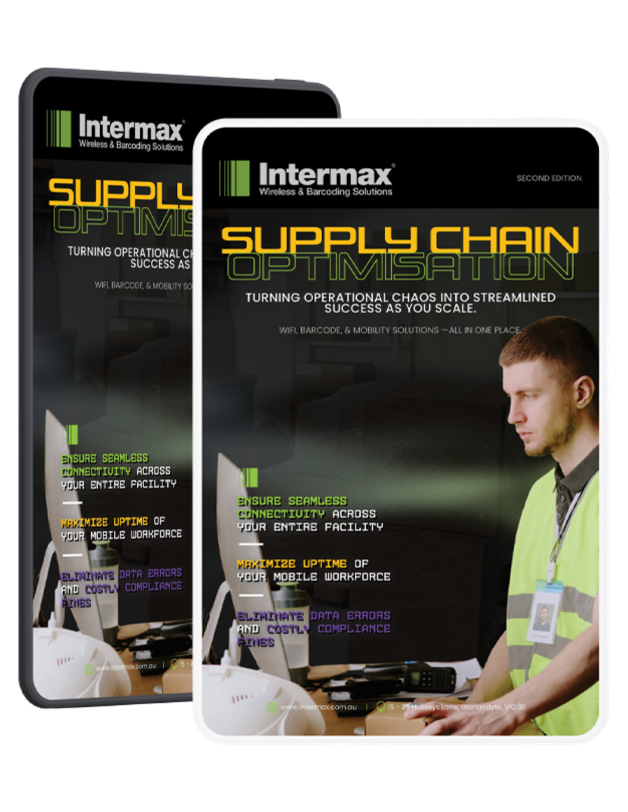
Discover how modern data tech is rewriting the marketing playbook. This 28-page magalog reveals strategies pros keep secret.
Free 28 Page Digital Magazine